An American Manufacturing Renaissance? The Debate Continues

Friday, March 29th, 2013

The ongoing debate about whether the US is experiencing a manufacturing renaissance heated up again this week when Goldman Sachs' chief economist, Jan Hatzius, issued a report, "The U.S. Manufacturing Renaissance:  Fact or Fiction?"

Hatzius' answer is "nope."

BusinessInsider writes that in his report, Hatzius has a sober analysis of the U.S. manufacturing renaissance. “Evidence for a structural renaissance is scant so far….Measured productivity growth has been strong, but US export performance — arguably a more reliable indicator of competitiveness — remains middling at best. And at least so far, there is not much evidence for large positive spillovers from the U.S. energy cost advantage to broader manufacturing output."

Hatzius continues:  “We have not yet seen a material pickup in output in the parts of the manufacturing sector that should benefit most from low natural gas prices, such as aluminum, steel, plastics, basic chemicals, and fertilizer and other agricultural products.”

Over at Time Magazine, Curious Capitalist blogger Rana Forooha raises doubts about Hatzius’downer opinion on manufacturing:  “… one immediate question is whether exports really do provide a more accurate picture, as the report suggests. It may be that more goods manufactured in the U.S. are staying in the U.S. As we’ve traveled around the country reporting on this topic over the last couple of years, a number of big industrial firms have pointed to growing demand for their products here at home – Caterpillar, which makes an increasing amount of its large earth-moving equipment for domestic mining, agriculture, and energy operations, is a great case in point.

Read the rest of this entry »


Relive FABTECH 2012 on the FABTECH Facebook Page

Monday, February 4th, 2013

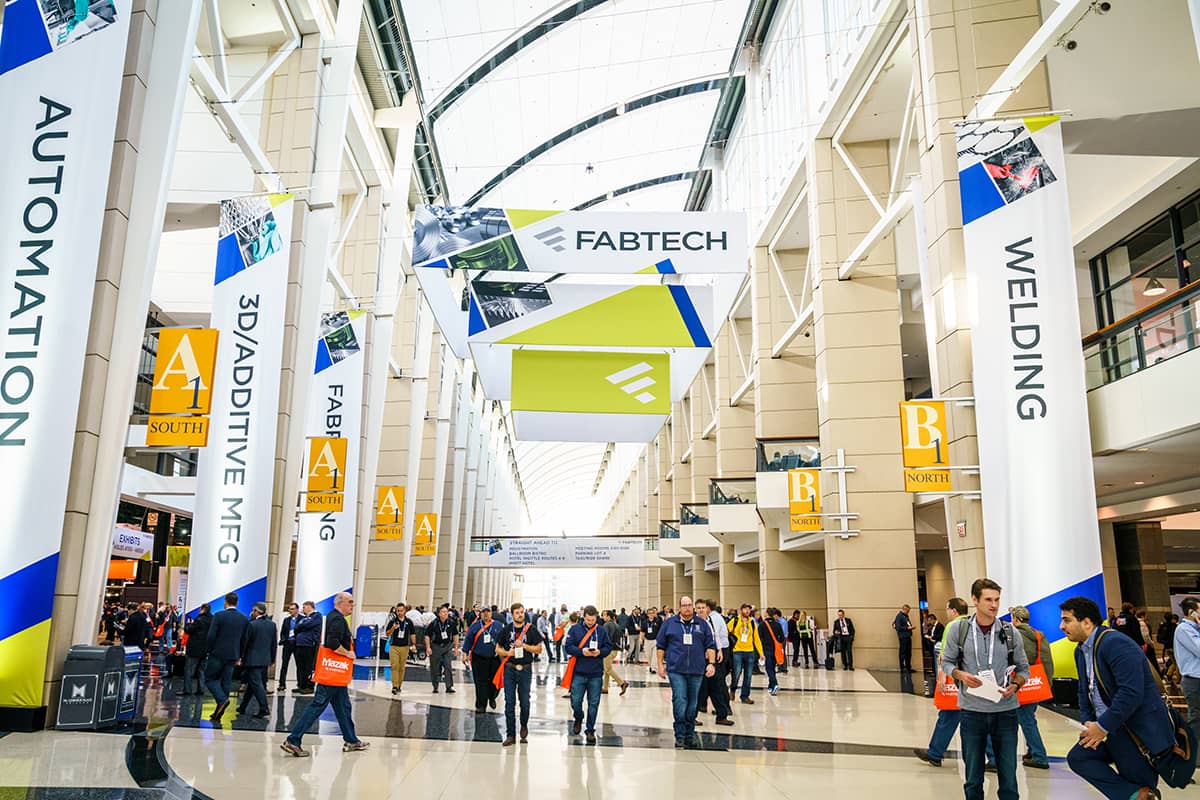
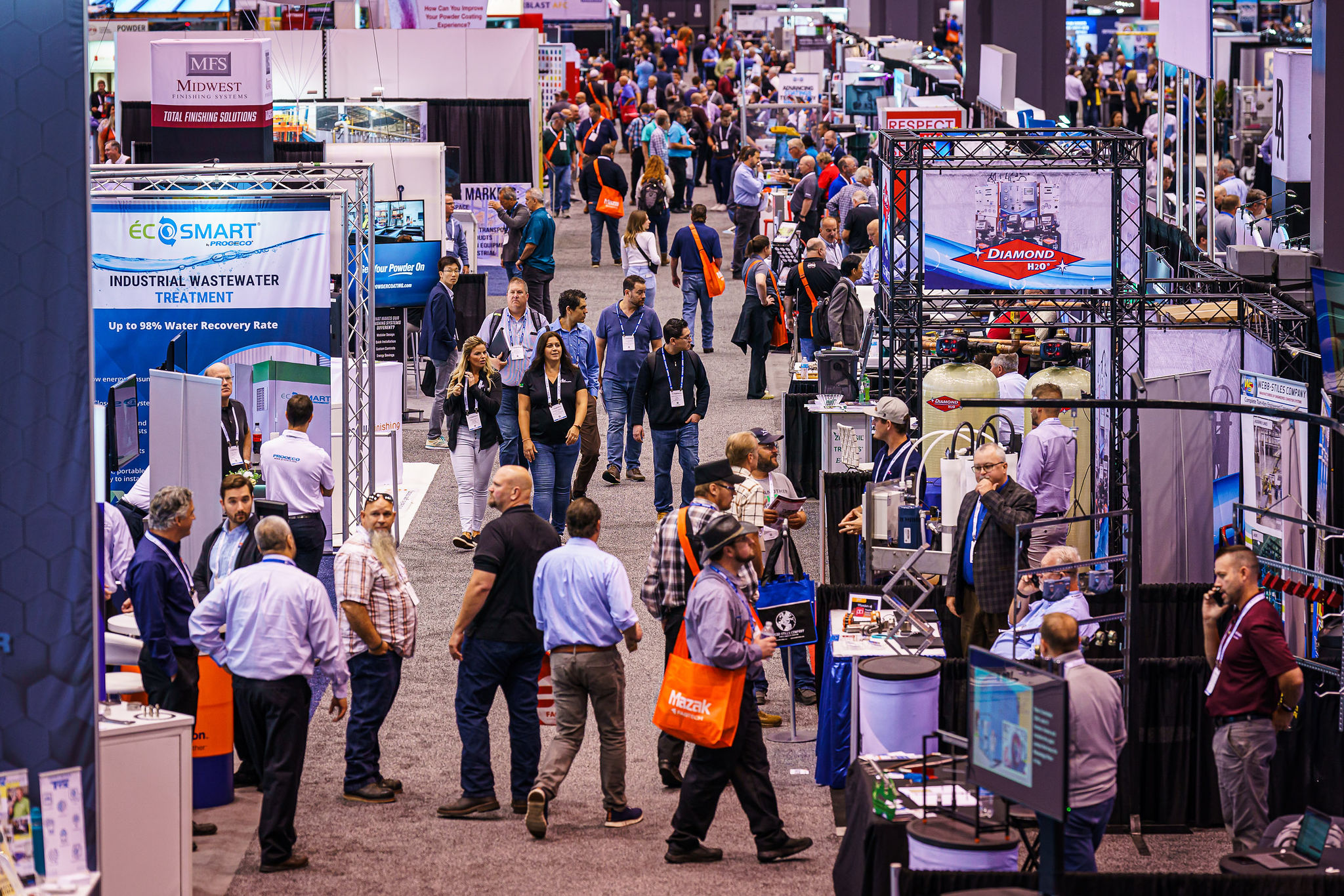
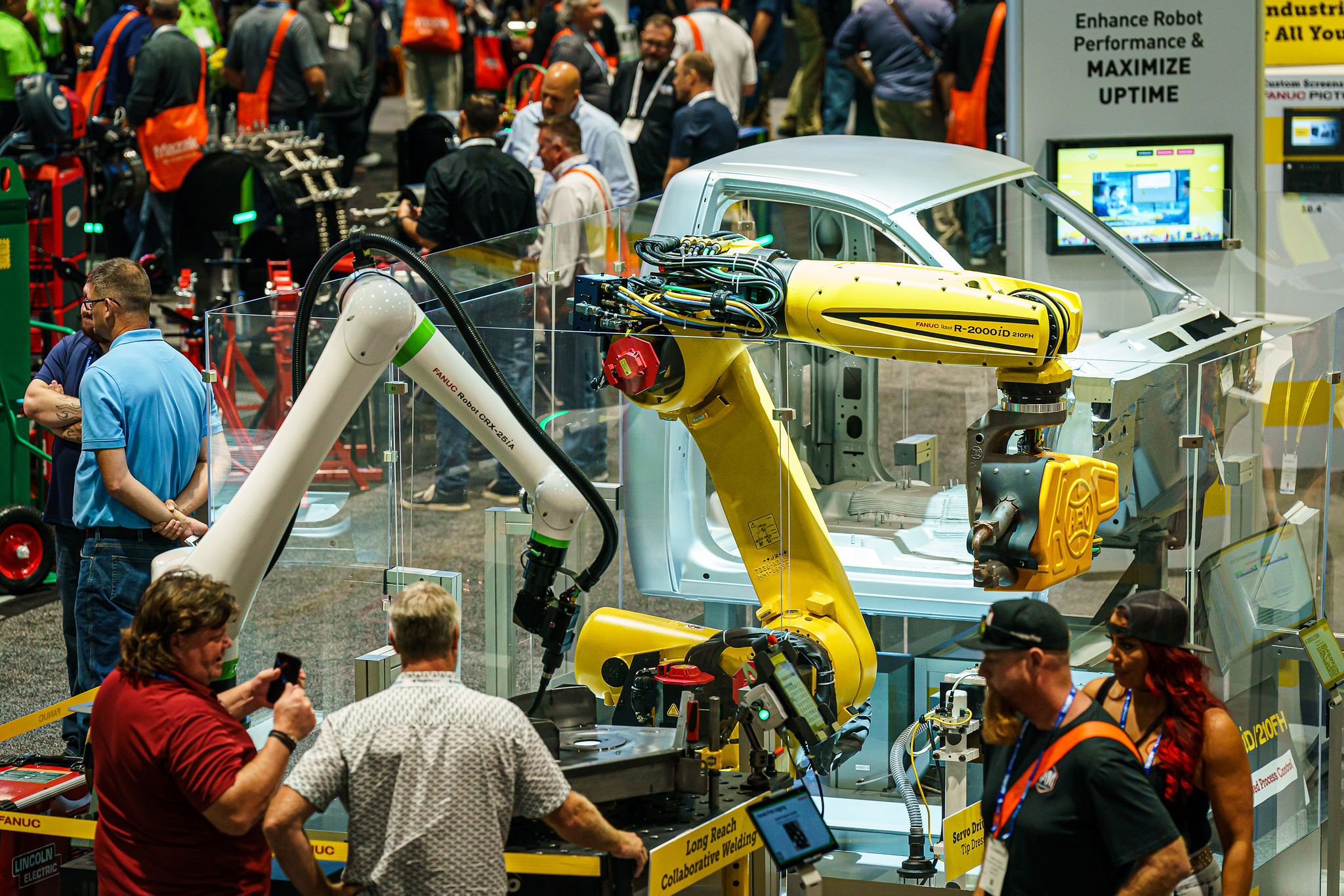
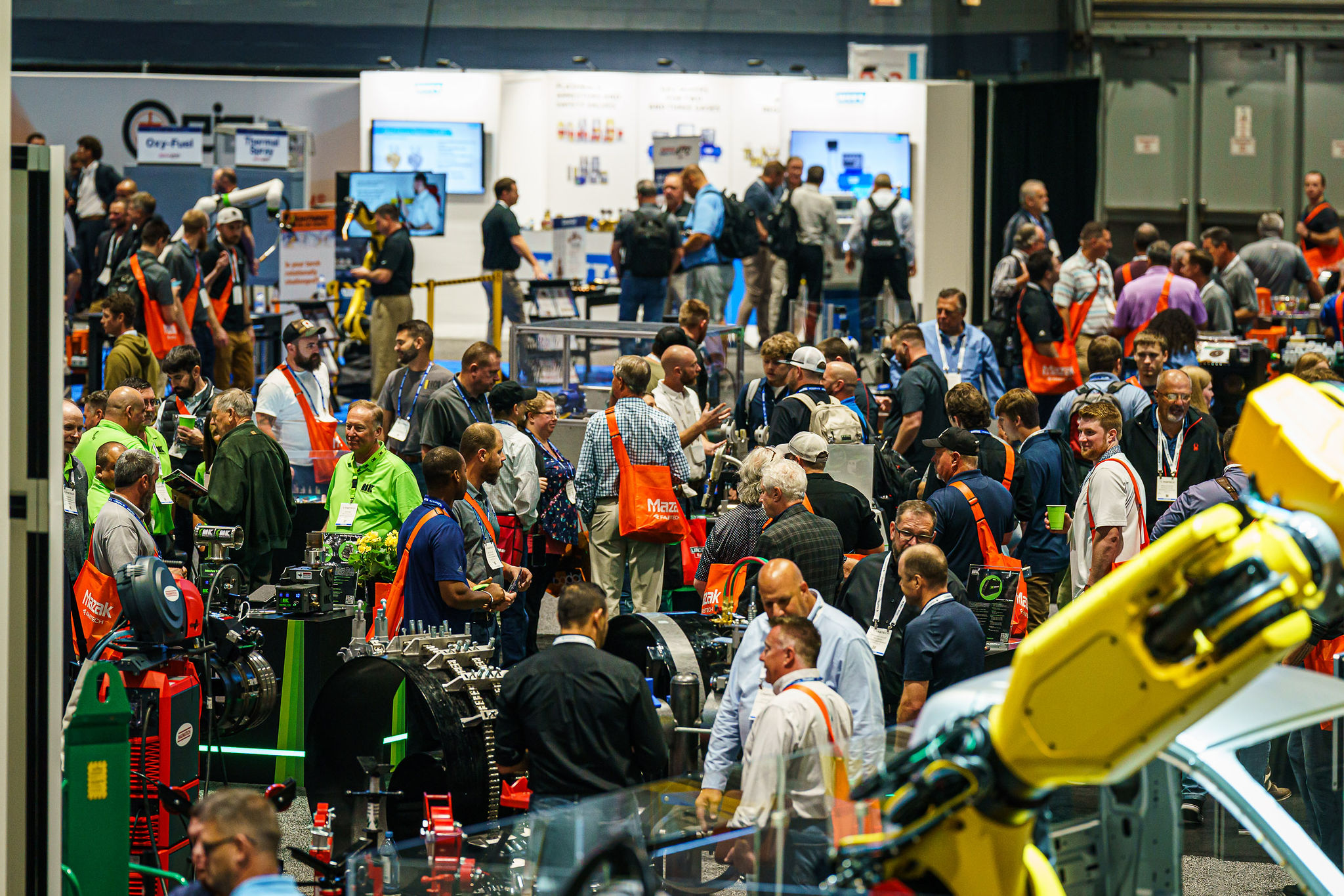
FABTECH 2013 may not be until November, but why not relive some of the best moments of FABTECH 2012 from Las Vegas?  We uploaded some pictures to our Facebook page to recap some of the best FABTECH 2012 moments.

Visit our Facebook page for a full slideshow of photos from the FABTECH 2012 show in Vegas.


Confronting the U.S. Advanced Manufacturing Skills Gap

Tuesday, January 29th, 2013

An article published this week in The American recounts the latest in research on whether a skills gap exists in American manufacturing today.

Comparing the conclusions of Deloitte and the Manufacturing Institute, Boston Consulting Group, and New York Times magazine reporter Adam Davidson, the piece shows conflicting opinions about whether the skills gap is huge (around 600,000 workers), smaller (between 80,000 - 100,000 workers), or nonexistent.

Putting aside those who reject the existence of the skills gap, the article points out that whether the skills gap today is perceived as large or small, "there is general consensus...that any skilled worker shortages today will be eclipsed by much larger challenges in the coming decade because of the pending wave of retirements."

The article shifts to focus on the solution saying, "The discussion should not focus so much on whether the worker shortage is 80,000 or 600,000, but rather on identifying the root cause of the skills gap, large or small, and how to address it."

In determining the best solution, the article juxtaposes the "fake skills gap" narrative of Davidson who insists the problem is manufacturers paying low wages with the experience of manufacturers in the field who currently foot the bill for training their employees.

"The solution to closing the skills gap," the article says, "lies in between these two alternatives - employers' willingness to pay competitive wages and assume some of the employee training costs, and job-seekers' willingness to pay for an education and acquire the marketable skills in demand by manufacturers."

So, for the first solution, the article highlights a number of examples of job training partnerships.

With those opportunities in mind, the article questions why students are not flocking to them.

Enter the second solution - Changing the way students and their families view manufacturing careers by addressing the field's "image problem."

The article concludes that questions about the size of the skills gap and how to fix it shine an important light on manufacturing issues and the importance of manufacturing to the future of the U.S. economy.

Read the full article here.

And stay tuned to our blog for updates on the 2013 show in Chicago (Nov. 18-21) along with other insights on manufacturing news.

You can also find us on Facebook Twitter and Linkedin.


Roundup of Manufacturing News January 21-25

Friday, January 25th, 2013

Here are some highlights of recent news in the manufacturing sector.

In a bright spot for industrial workers, last week, the Federal Reserve announced that factory output increased .8 percent last month.  That followed a 1.3 percent rise in November.  These back-to-back gains offered hope to manufacturers for greater success in 2013.  Read a full article from NPR on the announcement and predictions from economists here.

An article in USA Today this week claimed that making products here at home and marking them Made-in-USA is making a comeback as a marketing tool.  According to Margarita Mendoza, founder of the Made in America Movement, manufacturers, craftsmen and retailers are capitalizing on the opportunity to “score do-gooder points with consumers for employing stateside."  USA Today reports that it’s working, with 80% of Americans prepared to pay more for products made in the states and with 93% saying that willingness comes from wanting to keep jobs here in the USA.  Mendoza hopes that buying American is not just a “passing fad.”  For Mendoza, the movement reaches a wide variety of people.  She says that if people don’t understand the economic significance of buying American, “we need to pull on their heartstrings.  The thought of having a country like China take over, that alone is bone-chilling.”

The 10th annual Indiana High School Machining Competition took place at the end of last week in Indianapolis.  One local paper noted that two students from the C4 precision machining class at Columbus North High School participated in the competition which was put on by the Indiana chapter of the National Tooling and Machining Association.  This year's competition hosted students from eight high schools and career centers statewide.  Students were tested in basic machining principles and creating devices on lathes, mills and other equipment.

An article in the trade publication Laser Focus World reported the positive experience that Jefferson, Wisconsin-based American Weld Design (AWD) is having with its fiber-optic laser.  The article says the laser has quickly become a popular and efficient tool at  AWD, a Precision Metalforming Association member and a firm that does metal work for the automotive and telecommunications industries among others.  According to the article, the laser, known for its speed and accuracy, cuts reflective metals up to three times faster than a conventional laser.  Dave Hansen, owner of AWD, is quoted saying, “This machine will be our workhouse.  We are already running it 10 hours a day.”  Hansen’s company is one of about 100 such machines in the U.S.  Read the full article here.

Be sure to check back for updates and information on the 2013 show in Chicago (Nov. 18-21).

You can also find us on Facebook Twitter and Linkedin, or visit our website at www.fabtechexpo.com for the latest news and updates.


FABTECH 2013 Call for Speakers

Thursday, January 24th, 2013

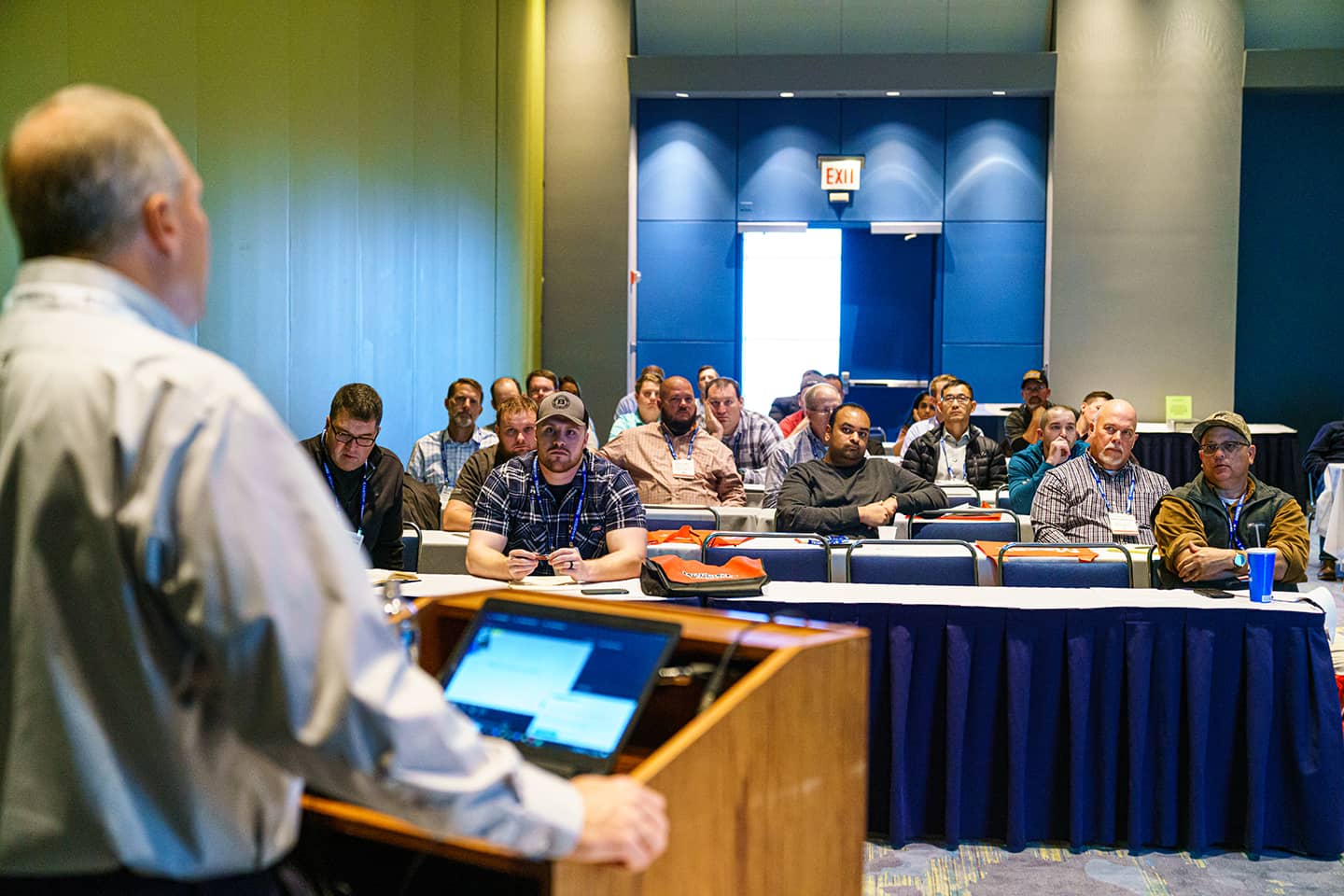
Are you passionate about the manufacturing sector?  Are you looking for new opportunities in your industry?  Do you have knowledge and experience to share?

If you said "YES!" to these questions, think about saying "YES!" to one more - Do you want to be a speaker at the upcoming FABTECH 2013 Educational Events?

The call for papers is now open so take this opportunity to submit your abstract now through the online Call for Speaker Form.

The FABTECH 2013 Educational Events are scheduled for November 18-21, 2013 in Chicago, Illinois.

Here are some benefits of speaking at an industry conference like FABTECH:

  • Share your technical knowledge, best practices, case studies, and innovations
  • Showcase your company’s leadership, progress, and success
  • Network with industry peers
  • Increase exposure for your booth at the exhibits

Speakers at FABTECH will be able to introduce themselves to new customers with their names and companies posted on the show website (fabtechexpo.com) and listed in the FABTECH combined advanced program brochure that is mailed to over 100,000 industry professionals and decision makers.

The deadline for submitting a Speaker Form is Wednesday, March 20, 2013 so act fast!


More on the Manufacturing Skills Gap

Wednesday, January 23rd, 2013

Martin N. Baily of the Brookings Institute, a former Chairman of the US President’s Council of Economic Advisers under President Bill Clinton, and James Manyika, Director of the McKinsey Global Institute and of McKinsey & Company, co-authored a thought-provoking column "Is Manufacturing 'Cool Again?'" for Project Syndicatea website that brings "original, engaging, and thought-provoking commentaries by esteemed leaders and thinkers from around the world to readers everywhere."

In the op-ed, Baily and Manyika declare "global manufacturing has the potential to state a renaissance and once again become a career of choice for the most talented." They point out that a manufacturing rebound will create high-quality jobs including "programmers, engineers, designers, robotics experts, data analytics specialists, and myriad and other professional and service-type positions."

However, the authors state that "the new wave of manufacturing technology needs a broad skills base" and warns that there is a potential shortfall of 1.5 million data-savvy managers and analysts.

The authors warn of an even greater skills gap.  Money paragraphs:

"And yet, across the board, manufacturing is vulnerable to a potential shortage of high-skill workers. Research by the McKinsey Global Institute finds that the number of college graduates in 2020 will fall 40 million short of what employers around the world need, largely owing to rapidly aging workforces, particularly in Europe, Japan, and China. In some manufacturing sectors, the gaps could be dauntingly large. In the US, workers over the age of 55 make up 40% of the workforce in agricultural chemicals manufacturing and more than one-third of the workforce in ceramics. Some 8% of the members of the National Association of Manufacturers report having trouble filling positions vacated by retirees.

Indeed, when the NAM conducted a survey of high-school students in Indianapolis, Indiana (which is already experiencing a manufacturing revival), the results were alarming: only 3% of students said that they were interested in careers in manufacturing. In response, the NAM launched a program to change students’ attitudes. But not only young people need persuading: surveys of engineers who leave manufacturing for other fields indicate that a lack of career paths and slow advancement cause some to abandon the sector."

The authors point to Germany and South Korea as two countries that attract the best and the brightest to the manufacturing sector, and challenge manufacturers in other countries to "figure out how to be talent magnets."  The authors conclude:

"Manufacturing’s rising coolness quotient should prove useful, but turning it into a highly sought-after career requires that companies in the sector back up the shiny new image with the right opportunities – and the right rewards."

Read Baily's and Manyika's op-ed here.

This blog has focused on the skills gap (see here and here) over the past 10 months and it was a hot topic at FABTECH's Special Event discussions in Las Vegas (see here).

What do you think could be done to address this growing problem?  Post your comments on this blog or on our Facebook page.


FABTECH 2012 — By the Numbers

Thursday, January 17th, 2013

Vegas is all about numbers and the 2012 FABTECH show in Vegas was a big success - just look at the numbers:

FABTECH Statistics:

●     25,903 Attendees

●     1,257 Exhibitors

●     465,330 sq. ft. of exibit space

●     117,487 Total Leads Collected

●     119 Average Leads Per Exhibitor

●     18% of attendees came from countries outside the US

●     54% of visitors attended for the first time in 2012

●     62% of attendees go to FABTECH exclusively

●     97% of attendees said reviewing equipment and technology at FABTECH is important in their purchase decision making process.

●     82% of visitors were satisfied or very satisfied with the FABTECH show overall.

●     58% of attendees plan to make a purchase in the next 6-9 months as a result of evaluating technologies and equipment at FABTECH 2012.

Be sure to check back for updates and information on the 2013 show in Chicago (Nov. 18-21).

You can also find us on Facebook Twitter and Linkedin, or visit our website at www.fabtechexpo.com for the latest news and updates.


Relive the Memories…FABTECH 2012 Highlights Video

Tuesday, January 15th, 2013

There's a new FABTECH 2012 Recap Video available with highlights from the Las Vegas show.   Relive the highlights:

FABTECH 2012 Recap Video

Find us on Facebook Twitter and Linkedin and check out our website at www.fabtechexpo.com for updates on the 2013 show in Chicago November 2013.


How did Manufacturers make out in the Fiscal Cliff Deal?

Friday, January 11th, 2013

In addition to celebrating the start of a new year, manufacturers were closely monitoring the "Fiscal Cliff" negotiations in Washington between Republicans and Democrats.  A deal was reached shortly on January 2 that averted massive spending cuts and tax hikes.

So how did manufacturers make out in the deal?  Omar Nashashibi, a manufacturing lobbyist in Washington, reports that the deal includes the temporary extensions and/or expansions of several important tax credits and deductions for manufacturers, including:

  • Estate Tax exemption of $5 million per individual/$10 million per family; excess taxed at 40% rate (this is indexed for inflation meaning in 2020 the first $17 million per family is exempt)
  • Extension through 2013 of 50% Bonus Depreciation and can use AMT credits in lieu
  • Extension for 2012 and 2013 of expanded Section 179 Expensing with $500,000 maximum amount and the $2 million phase-out threshold
  • Extends R&D Tax Credit through 2013 making it retroactive to January 1, 2012 at 20% and 14% for the simplified credit.

In addition, the deal makes permanent Section 127 - the Employer Education Assistance provision - that previously required Congress to renew it on an annual basis.

For additional information, check out Omar's analysis here.

The "Fiscal Cliff" deal punted for two months the issue of the automatic spending cuts contained in "sequestration" until March 1.   Congress must also vote to increase the debt ceiling by the beginning of August to avoid the US going into default.  Stay tuned, Act II will play out over the next six weeks!


We’re Back!

Friday, January 11th, 2013

FABTECH Family - After taking some time to recover from the great show in Las Vegas, stuffing ourselves with turkey and opening our holiday presents, and celebrating the New Year, the FABTECH Expo blog is back!

Stay tuned for updates on the 2013 show in Chicago (Nov. 18-21),  insights on manufacturing issues and other news you can use.

You can also find us on Facebook Twitter and Linkedin.  You can also always check out our website at www.fabtechexpo.com for updates.